
‘The whole new way of experiencing music ... perfectly created atmosphere.’
‘It was an utterly amazing experience! I enjoyed every moment of the concert.’
‘We enjoyed the concert enormously, both the performances and the very informative talks.
It was a most stimulating evening.’
‘I listened to beautiful music and I learned - what more could you ask from an evening?
Really, it was very special.’
‘Congratulations on the great success of last night’s debut of the Aspect Foundation in NY. Lovely venue, terrific crowd, and lots of wonderful energy.’
‘What a beautiful evening it was! Thank you very much! I don’t think I’ve ever been to an event like this.’
April 2018
Mon Tue Wed Thu Fri Sat Sun
1
2 3 4 5 6 7 8
9 10 11 12 13 14 15
16 17 18 19 20 21 22
23 24 25 26 27 28 29
30
May 2018
Mon Tue Wed Thu Fri Sat Sun
1 2 3 4 5 6
7 8 9 10 11 12 13
14 15 16 17 18 19 20

21 22 23 24 25 26 27
28 29 30 316


CALENDAR


NEXT
Thursday, APR 12, 7.30pm

ITALIAN ACADEMY TICKETS $45
Counterpoint had been a constant preoccupation throughout J.S. Bach’s life and ‘The Art of Fugue’, one of his last works, was the culmination of this lifetime obsession. It has long been supposed that the composers death interrupted its completion, yet recently other possibilities and theories have been suggested.
Follow us on


BOX OFFICE (917) 900-6657
UPCOMING EVENTS
April 19

Bach Cello Suite No.1 in G major
Mendelssohn Cello Sonata No.2 in D major
Liszt Piano Sonata in B minor
 LEARN MORE
May 14

Couperin
Rameau
Clerambault
Leclair
LEARN MORE
LEARN MORE
LEARN MORE
Thursday, APR 19, 7.30pm
Italian Academy TICKETS $45
Bach Cello Suite No.1 in G major
Mendelssohn Cello Sonata No.2 in D major
Liszt Piano Sonata in B minor
Thursday, MAY 17, 7.30pm
Italian Academy TICKETS $45
Couperin, Rameau, Clerambault, Leclair
LEARN MORE
BOOK TICKETS
ASPECT FOUNDATION FOR MUSIC AND ARTS is a non-profit organization

The Endellion String Quartet
Illustrated talk by David Waterman
October 26
Haydn String Quartet in G major, Op. 54 No. 1
Beethoven String Quartet No. 12 in E flat major, Op. 127
Schubert Quartettsatz in C minor, D703
This concert, featuring three exceptional works for string quartet, will explore the extent to which Haydn, Beethoven and Schubert, whose lives overlapped in Vienna at the turn of the nineteenth century, were kindred spirits. Schubert’s Quartettsatz, the first movement of an unfinished quartet, contains an achingly beautiful melody set off by an underlying sense of fear and tragedy. By contrast, Haydn’s G major Quartet, Op. 54 No. 1 reveals its composer at his most good-natured and genial, while also embracing a slow movement of searching profundity. Beethoven’s Op. 127 is a work of radiance and lyricism whose second-movement variations encompass everything from playfulness to prayer.
BOOK TICKETS
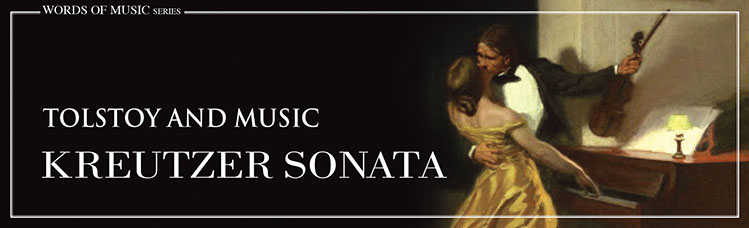
Ignat Solzhenitsyn piano
Mark Steinberg violin
Ariel Quartet
Illustrated talk by Ignat Solzhenitsyn
Thursday, November 16, 7.30pm
Italian Academy 1161 Amsterdam Avenue, NY 10027
Beethoven Violin Sonata No. 9 in A major, Op. 47 Kreutzer Sonata
Tchaikovsky String Quartet No. 1 in D major, Op. 11 (2nd movement)
Janáček String Quartet No. 1 Kreutzer Sonata
Beethoven’s ‘Kreutzer’ Sonata for violin and piano (dedicated to French violinist Rodolphe Kreutzer, though he never performed it) is the centerpiece of Tolstoy’s disturbing novella The Kreutzer Sonata, in which the writer expresses his controversial views on marriage and sexuality.
His work in turn inspired Janáček’s intense and feverish First String Quartet, whose musical narrative seems to mirror the unfolding marital tragedy of the novella, and whose third movement is modelled on the second theme of Beethoven’s ‘Kreutzer’ Sonata.
Join us as we explore some unique connections between music and literature, and witness music become, in Tolstoy’s words, ‘a shorthand of feelings’.


Ying Quartet
Joseph Anderer horn
William Short bassoon
Alexander Bedenko clarinet
Brendan Kane double bass
Illustrated talk by Misha Donat
Thursday, December 14 , 7.30pm
Bohemian Hall 321 East 73rd St, New York
Schubert Octet in F Major D.803 Op. 166
No piece by Schubert pays clearer homage to his greatest contemporary, Beethoven, than his Octet – one of his most irresistibly exuberant chamber works.
It was commissioned by Count Ferdinand Troyer, amateur clarinetist and chief steward to Beethoven’s pupil and patron
Archduke Rudolph of Austria. Troyer wanted a piece modeled on Beethoven’s Septet, Op. 20, and Schubert duly scored his music for an almost identical ensemble.
He also mirrored Beethoven’s six-movement scheme – even prefacing each of the outer movements with a slow introduction. And as in the Beethoven, the work’s centerpiece is a set of variations.
This being Schubert, the variation theme comes from one of his vocal compositions: a duet in a Singspiel he had composed at the age of eighteen.
Alexander Kobrin piano
Philippe Quint violin
Jiin Yang violin
Milena Pajaro van de Stadt viola
Zlatomir Fung cello
Brook Speltz cello
Illustrated talk by Damian Fowler
Wednesday, February 7 , 7.30pm
Bohemian Hall, 321 East 73rd Street
Taneyev Piano Quintet in G minor, Op. 30
Arensky Second String Quartet No. 2 in A minor
Blazing stars such as Tchaikovsky risk eclipsing less sensational talents, but these more modest figures can have their moments of greatness too. Anton Arensky’s Quartet, composed in memory of Tchaikovsky, is for an ensemble of single violin, viola and two cellos, giving the sound a haunting dark richness.
Quotations from Orthodox chants and from Tchaikovsky’s song ‘Legend’ suggest a prayer for the composer’s soul, but the outcome is joyous and celebratory. Tchaikovsky’s pupil Sergei Taneyev is sometimes called ‘the Russian Brahms’.
He cherished Classicism and intricate counterpoint and set his face against populist emotionalism. His Piano Quintet is powerful and purposeful, however, and its sense of heroic determination is ultimately very moving.

Illustrated talk by Richard Boothby
Thursday, April 12, 7.30pm
Italian Academy 1161 Amsterdam Avenue
Bach The Art of Fugue
Counterpoint had been a constant preoccupation throughout J.S. Bach’s life and The Art of Fugue, one of his last works, was the culmination of this lifetime obsession. It has long been supposed that the composer’s death interrupted its completion, yet recently other possibilities and theories have been suggested.
Richard Boothby presents an illustrated performance with his group Fretwork – whose celebrated recording of this remarkable work is their best-selling album – and discusses some of the music’s most intriguing features.
The evening will conclude with an analysis of the final fugue, and a performance of a possible reconstruction of its missing final bars.
Thursday, April 19 , 7.30pm
Italian Academy 1161 Amsterdam Avenue
Bach Cello Suite No.1 in G major
Mendelssohn Cello Sonata No.2 in D major
Liszt Piano Sonata in B minor
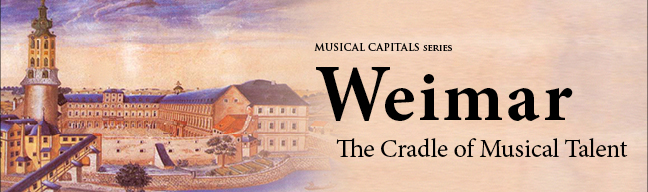
For over two centuries, Weimar endured as a capital for music composition and performance. From J S Bach's works in the 18th Century, to Richard Strauss' operas of the 1920s, the city has inspired and shaped western music from era to era.
In this presentation we explore the effect Weimar has had on some of the great talents that have called it home over the centuries.
Thursday, May 17 , 7.30pm
Italian Academy 1161 Amsterdam Avenue
François Couperin
Jean-Marie Leclair
Jean-Philippe Rameau
Georg Philipp Telemann
François Devienne
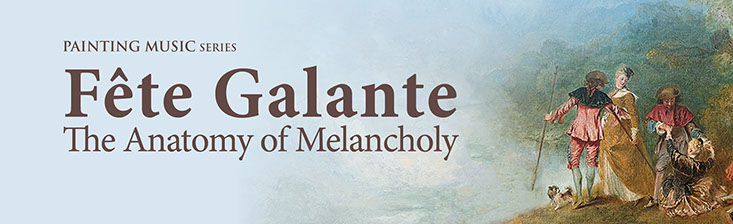
Out of the dark final years of the reign of Louis XIV came a new style of art characterized by freshness, elegance and sensuality. While Versailles was draped in the heavy fabrics of guilt and failure, penance and penitence, Antoine Watteau was breaking with tradition, creating the new genre of the fête galante. His delicate brushstrokes and mastery of color and nuance are echoed in the music of his contemporary François Couperin. As art historian Tav Holmes guides us through the unique, idealized world of Watteau, Boucher and Fragonard, the Four Nations Ensemble and soprano Sherezade Panthaki will perform works of equally evocative beauty by Couperin, Rameau, Clérambault and Leclair.